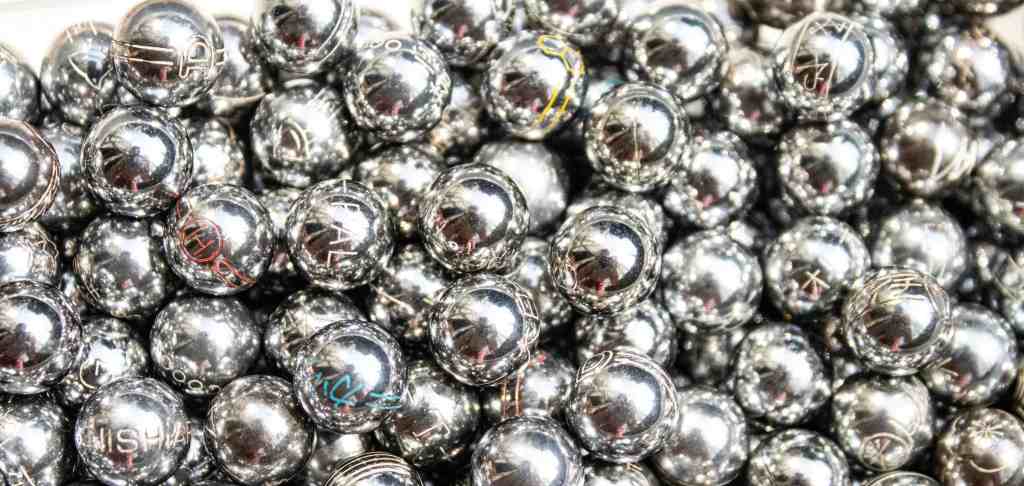
Restoring pachinko machines is a labor of love, but restoring machines from the 1940’s and 1950’s is something greater than that. They are really tough. As I’ll mention in my video below, I chalk it up primarily to the cheap fasteners used in construction of the machines originally. If it isn’t a tiny, brittle nail that has a bad head to grasp onto with needle nose pliers, then it’s going to be flathead screws that have very shallow slots to back the screw out of the hole.
Before & After Pictures


Step 1: Tear it Down!
The first step in getting this project going was stripping everything off of the machine. This had to be done very carefully to avoid bending thin metal decorative and mechanical pieces that can easily be broken and bent out of shape. This is where the hurdle of fasteners comes into play that really slows the process down. The tiny nails used to hold the mechanical components to the playfield board on this machine needed to have the heads of them drilled off. At that point, I wiggled the parts off of what was left of the nails, and then grasped the shaft of the headless nails and pulled the ones I could. Others I had to bury into the playfield with a punch.


Step 2: Strip Playfield Board
I pried the main playfield board from the frame of the machine. This was also more difficult than normal machines I usually work on, despite the use of non-twisted nails. All brass playfield nails were pulled and dumped into a rock tumbler. Painted fruit pieces were looked at closely and I made the decision to touch them up and clear coat them to prevent all future paint loss. The center attraction had nearly lost all its paint after being pried from the machine, but luckily I had taken pictures of everything prior to disturbing it so I could match the design and colors.


Step 3: The Fine Details
At this point nails and other small brass pieces are tumbling, metal pieces are soaking in a large bucket of rust remover, I’m matching paint colors (used Testors model paint) for the front fruit pieces and I’m smoothing out the playfield board with an orbital sander. I was careful not to remove a handwritten note left on the back of the board in chalk. I polyurethaned over it so the handwritten note will always be on the machine. To properly match colors used on the front pay pocket covers, I had to mix many colors together and test them before painting directly onto the covers themselves. Painfully, I tried clear coating the center feature too soon after painting, and my work shriveled up before my eyes…Yes, that means I got to paint it twice!


Step 3: Rust Removal
Piece by piece they came out of the bucket of rust remover and I used 00 steel wool to knock more rust off of them before being soaked a second time. After sitting in the bucket another 24 hours, the parts were removed one at a time, cleaned with water and dried one at a time to be clear coated immediately after drying. It’s important to not let them sit for even five minutes because the goal is to beat the surface rust to the punch. After the clear coat dried for 24 hours in the warm springtime sun, I coated them a second time with clear coat.


Step 4: Wood Work
As I waited for the clear coat to dry on the metal pieces, I got to work on sanding and refinishing the original wood frame of the machine. I needed two colors of stain, and after that dried for 24 hours or so, I got to work on the polyurethaning. In total, this machine got about 3 coats of polyurethane. Now all my parts were clean, pay pocket covers were painted and clear coated, and the wood was beautifully refinished. It was time for the new playfield to go on and to begin reassembly.

Step 5: Reassembly
Reassembly took a good amount of time to get things right. The nails on this machine were driven in deeper than your standard 1970’s machine, so the gauge I use to make sure every nail is driven in the same depth was of no use. I made a new gauge from wood, but ultimately it didn’t help much. The brass nails on this machine were not twisted, and I can now understand why manufacturer’s eventually moved to twisted nails. With no twist, the nails are way too easily adjusted in and out of correct depth and bend. What usually takes me an hour to nail took me just shy of 3 hours to punch all the nails back in and adjust them properly. I opted for very small zinc screws to reattach mechanical pieces to the rear playfield that I ordered on Amazon a while ago. The screws are so small and skinny that I couldn’t find any like it at any of the hardware shops nearby. It was at this point that I used a pair of pliers with flat tips to bend and manipulate bent up parts back into correct shape.

Step 6: Testing and Adjusting
I dropped a ball down into a pay pocket, and the machine rang its first jackpot in many decades. No adjustments needed which really surprised me considering how much work all the other steps were. I had a new piece of glass cut (original broke in shipment) and fastened the mahogany wood frame back into the machine window to hold the glass in place.

Overall, I’m very satisfied with this machine’s restoration. It was tough work, but I love saving and preserving history. That’s why this project landed in my lap. Soon I will build a frame for it and add it to my collection of machines!
